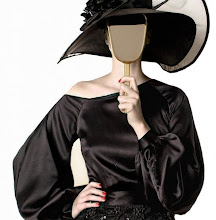
FACELESS part II
Length: Sep 28 to Nov 24, Tue to Sun, 13:00-19:00, free admission
Opening: Fri, Sep 27, 19:00
Location: freiraum quartier21 INTERNATIONAL/MuseumsQuartier Wien
www.quartier21.at
www.facelessexhibition.net
Exhibition FACELESS part II Opens at MuseumsQuartier Wien
Foto: Maiko Takeda, Atmospheric Reentry 2013 (c) Maiko Takeda/Photography Bryan Huynh
“FACELESS part I” showed the appeal that hiding, veiling, or masking the face exerted on art and fashion after 9/11. The second part of the exhibition, opening on September 27 at 19:00 in freiraum quartier21 INTERNATIONAL at the MuseumsQuartier Wien, continues the survey in a more participatory approach. The focus is on interdisciplinary works and lectures, performances, and workshops that convey how we can survive without losing face and at the same time revolt.
“As much as a face and an expression can give away about us, we have plenty of creative potentials at our disposal for making these tale-telling surfaces illegible, even invisible, without running the risk of suffering social death,” says Brigitte Felderer, co-curator with artist Bogomir Doringer of the group exhibition “FACELESS part II.”
“The first part of the exhibition attracted 12,000 visitors. Its success demonstrates how relevant the theme is and how much people are interested in it. ‘FACELESS part II’ resumes the critical exploration of problems of our media culture,” says MuseumsQuartier Director Dr. Christian Strasser.
The works by 45 artists are divided into themes like digital masks, mirrors, icons, and invisible people. As for part one of the show, the exhibition design was created by students from the Department for Stage and Costume Design, Film, and Exhibition Architecture at Mozarteum University in Salzburg. “FACELESS part II” will additionally feature photos on the theme of facelessness contributed by more than 50 artists to the website www.facelessexhibition.com (totally about 2.000 posts). All names of artists will be announced online.
The poignant, poetic sound of William Basinski’s video work “Disintegration Loop 1.1.,” audible throughout the exhibition space, immerses visitors in a melancholic atmosphere. The film by the American composer was shot on the evening of September 11, 2001, and in a single, more than 60-minute take shows the disintegrating Twin Towers enshrouded in wafts of smoke.
Jill Magid’s installation “Article 12/The Spy Project” was produced for the Dutch Secret Service. In this assignment, she portrayed the spies to give the organization a “human face.” Although she always protected their identity, some parts of her work were later censured and confiscated. The central element of her text-based installation is “I Can Burn Your Face,” a neon piece shining so brightly that it is virtually impossible to decipher the confidential information with the naked eye.
Andrew Norman Wilson uncovers the fact that the world’s largest search engine also employs fourth class workers. The film “Workers Leaving the Googleplex” is about so-called ScanOps, low-paid temps who unbeknown to the public scan books for Google’s digital library. The “ScanOps” photos also show how some of the book pages are misscanned and include unwanted elements. British artist Lucy Wood’s installation “Distant Neighbors/Vecinos Distantes Exactitudes” is themed around the invisible migrants who illegally cross the border between the USA and Mexico. Ari Versluis and Ellie Uyttenbroek’s multi-year photography project on identity and uniformity shows how individuals from various social groups resemble each other in terms of attitude and dress code.
Foto: Adam Harvey, Anti-Drone Burqa 2013 (c) Adam Harvey/ahprojects.com in collaboration with Johanna Bloomfield
American artist Adam Harvey creates wearable privacy in collaboration with fashion designer Johanna Bloomfield. Their “Stealth Wear” features intelligent camouflage clothing and accessories that protect the wearer from surveillance. As its second station after the New Museum in New York, the Privacy Gift Shop is making an exclusive appearance at the exhibition. Items on sale include the anti-drone collection made of metalized textiles that cannot be detected by infrared cameras. Zach Blas, founder of the artist collective Queer Technologies, develops forms of protest involving the distortion of biometric data. His project “Facial Weaponization Suite” reveals how we can evade face recognition, deliver false data, or wear the “face of many.” “As the face becomes a site of ever increasing control and governance, new ethical relations to the face are emerging that embrace defacement and escape, not necessarily mutual recognition but collective transformation that is both anarchic and commonizing. Today, the mask is the most popular implementation of defacement, a celebration of refusal and transformation,” says Zach Blas.
Foto: KATSU, Status Update (c) KATSU
Like Addie Wagenknecht and KATSU, German conceptual artist Aram Bartholl is part of the New York artist collective F.A.T. - Free Art and Technology Lab. In “How to Vacuum Form” he shows how you can make your own Guy Fawkes mask, the accessory of protest. In his videos and performances, Jeremy Bailey skillfully plays a nerd. The Canadian artist is represented in the exhibition and the side program, among other things giving a workshop for teenagers called “Hey You with the Totally Awesome Face” to teach them how to trick webcams and look more popular. Dutch artist Arthur Elsenaar makes the face dance. His research project “Artifacial” makes it possible to digitally control movements of the face muscles with electrical impulses.
Foto: Ondrej Brody & Kristofer Paetau, The Punishment 2005 (c) Ondrej Brody & Kristofer Paetau
In the video “The Punishment” by Ondrej Brody and Kristofer Paetau, children exercise the seemingly natural urge to punish evil with relish – in this case a photograph of George Bush. By melting away, the faces in Ben DeHaan’s digital portraits demonstrate the fragility and short life of digital formats. Japanese hatmaker Maiko Takeda creates masks and headdresses that seem to come from a virtual world. Björk has been wearing them at concerts for several months now. German artist Martin Backes adapts the pixel filter of Google Street View that makes faces unrecognizable and reproduces it on the fabric of his Pixelhead masks. On the search for the right/perfect face through plastic surgery, artist and filmmaker Martin C de Waal tests the boundaries of his personality. “Narciss,” Mirko Lazović’s sculpture made of mirrors, makes it impossible to see your own reflection. Bryan Lewis Saunders is an American artist with many faces. For many years, he has been drawing a self-portraits every day. “FACELESS part II” shows his 48-part series “Under the Influence,” created under the influence of a daily changing assortment of drugs and substances.
Artists:
Martin Backes (GER), Jeremy Bailey (CAN), Jonathan Barnbrook (GBR) for David Bowie, Aram Bartholl (GER), William Basinski (USA), Zach Blas (USA), Heiko Bressnik (AUT), Ondrej Brody (CZE) & Kristofer Paetau (FIN), Mark Brown (NED/GRB), Cracked Labs (AUT), Ben DeHaan (USA), Sofie Groot Dengerink (NED), DENNATON (Jonatan Söderström & Dennis Wedin) (SWE), Arthur Elsenaar (NED), Hrafnhildur Gissurardottir (ISL), Adam Harvey (USA), Jakob Lena Knebl (AUT) & Thomas Hörl (AUT), KATSU (USA), Miodrag Krkobabić (SRB), Matthieu Laurette (FRA), Mirko Lazović (SRB/NED), Theo-Mass Lexileictous (CYP), Vanessa Lodigiani (MEX), Jill Magid (USA), Alberto de Michele (ITA), Jelena Misković (SRB), Bob Miloshević (SRB), Andrew Newman (AUS/GER), Bernd Oppl (AUT), Marco Pezzotta (ITA), RAF SIMONS, Tarron Ruiz-Avila (AUS), Bryan Lewis Saunders (USA), Tim Silver (AUS), Maiko Takeda (JAP), Ari Versluis (NED) & Ellie Uyttenbroek (NED), Daniel Vom Keller (SUI/NED), Martin C de Waal (NED), Anne Wenzel (NED), Lucy Wood (GRB), Andrew Norman Wilson (USA), and Marcus Zobl (USA/AUT).
*Some of the participating artists are living and working in the art studios at the MQ as part of the quartier21/MQ Artist-in-Residence program.
“FACELESS part II” has been has been organized in cooperation with the Federal Ministry for European and International Affairs, Artistic Technology Research (University of Applied Arts Vienna), and Mozarteum University in Salzburg with the support of partners and sponsors from Austria and abroad. A side program will feature a symposium as well as guided tours, performances, lectures, and workshops, including during the VIENNAFAIR and VIENNA ART WEEK.
Showing posts with label EXHIBITION. Show all posts
9/16/2013
7/13/2013
FACELESS - EXHIBITION VIEWS
FACELESS – Facelessness at the MuseumsQuartier Wien
www.m-q.at
FACELESS – Part 1
Length: July 3rd to Sep 1st, Tue to Sun, 13:00-19:00, free admission
Location: freiraum quartier21 INTERNATIONAL/MuseumsQuartier Wien
Exhibition views of “FACELESS”
Copyright: David Payr
www.m-q.at
FACELESS – Part 1
Length: July 3rd to Sep 1st, Tue to Sun, 13:00-19:00, free admission
Location: freiraum quartier21 INTERNATIONAL/MuseumsQuartier Wien
Exhibition views of “FACELESS”
Copyright: David Payr
4/16/2013
EXHIBITION : FACELESS
FACELESS – Facelessness at the MuseumsQuartier Wien
www.m-q.at
FACELESS – Part 1
Length: July 3rd to Sep 1st, Tue to Sun, 13:00-19:00, free admission
Location: freiraum quartier21 INTERNATIONAL/MuseumsQuartier Wien
Marina Abramovic Light/Dark, 2006 Courtesy Galerie Krinzinger, Wien
Ren Hang; (c) Ren Hang
Philippe Vogelenzang & Majid Karrouch: IN & OUT “Prostitutes on Polaroids”
(c) Philippe Vogelenzang & Majid Karrouch
Hester Scheurwater: Shooting Back #17; (c) Hester Scheurwater
Asger Carlsen: HESTER (16)
(c) Asger Carlsen, Courtesy Dittrich & Schlechtriem, Berlin
Rebel Yuths; (c) REBEL YUTHS
Bernhard Willhelm
SS 13, 3D: Geoffrey Lillemon, Photo: Petrovsky&Ramone
Jun Takahashi for UNDERCOVER
(c) UNDERCOVER AW 2006/2007 Collection "GURUGURU"
Thorsten Brinkmann Lady Glittersky, 2009 © Thorsten Brinkmann, VBK, Wien 2013
Ute Klein Resonanzgeflecht #2, 2009 © Ute Klein
The exhibition FACELESS at freiraum quartier21 INTERNATIONAL explores the phenomenon of inescapable recognizability in the media and the resulting strategies of media users to become virtually faceless. FACELESS takes a radical look at this fairly recent phenomenon of everyday media culture and shows how it manifests in visual art, fashion, photography, advertising, and dance. The show features works by artists like Marina Abramovic, Thorsten Brinkmann, Peter William Holden, and Maison Martin Margiela as well as projects created by unknown Internet dwellers.
The highly diverse strategies and methods of making faces “disappear” on the Web can be read as ironic, angry, or justified criticism of our media-infused reality. Faces do not disappear, but are manipulated beyond recognition, sometimes disfigured. The artist Bogomir Doringer, in collaboration with Brigitte Felderer from the University of Applied Arts Vienna, curated the two-part exhibition FACELESS. Part 1 is on view from July 3rd to September 1st, 2013.
“Many of the faces that appear on the Web are familiar and well-known. We recognize them, associate biographies, scandals, stories with them, and get the impression of gaining an insight into a personality and even witnessing an entire life. But in the end, the physiognomies we encounter only reflect our own personal concept of happiness, recognition, attention, and success,” says Brigitte Felderer.
“FACELESS critically examines problems of our media culture and presents the various approaches taken by the artists selected. Due to the complexity of the subject, the exhibition will be shown in two parts, a first for freiraum quartier21 INTERNATIONAL,” adds Dr. Christian Strasser, director of the MuseumsQuartier Wien.
After the events of 9/11 and in response to the fear of terrorist attacks, the levels of transparency and control have been taken to areas where they would have been unthinkable before. This has led to a change in security concepts and the expansion of surveillance systems. Social networks, which often violate privacy but promise their users popularity in exchange, have become the norm. Many artists critically engage with this subject and use “hidden” faces as a possibility to live an unobserved life.
Artist Thorsten Brinkmann, for example, presents self-portraits that in color, pose, and composition are reminiscent of classic portrait painting. But used and discarded everyday objects replace his facial features. Masks and head coverings from fashion labels like Maison Martin Margiela, Viktor & Rolf, and Bernhard Willhelm suggest that models’ faces have been redundant for the presentation of collections.
Conversely, a public persona like Marina Abramovic attempts to relativize her high recognition value in photographic self-portraits. Frank Schallmaier, in turn, makes collages using photographs that he finds in social networks and online matchmaking sites for homosexuals: they portray people who show themselves, but hide their faces with the promise of retaining anonymity. Hester Scheurwater’s photographic works examine the media representation of women as objects of desire. In Ute Klein’s photographs the bodies of lovers melt into temporary, faceless sculptures. The self-portraits of Nienke Klunder parody the banal omnipresence of erotic images while Peter William Holden’s installation features body parts that dance.
The side program of the exhibition includes special events, artist talks, workshops for kids and teens, and podium discussions. On opening night, visitors will be able to participate in the performance “Anonymity” by Addie Wagenknecht and Stefan Hechenberger, a playful critique of surveillance society. Black glasses distributed to the visitors are reminiscent of censor bars and images from surveillance cameras make the observed into observers. Addie Wagenknecht and Stefan Hechenberger developed “Anonymity” in New York and adapted it for the opening of the exhibition FACELESS. They are artists-in-residence of the Artistic Bokeh initiative, part of the Artistic Technology Research project of the University of Applied Arts Vienna.
Artists :
Marina Abramović (SRB/USA), Marc Bijl (NED/GER), Thorsten Brinkmann (GER), Dora Budor & Maja Čule (CRO/USA), Ondrej Brody (CZE) & Kristofer Paetau (FIN), Asger Carlsen (DEN/USA), Nezaket Ekici (TUR/GER), Shahram Entekhabi (IRI/GER), Caron Geary aka FERAL is KINKY (GBR), David Haines (GBR/NED), Ren Hang (CHN), Sabi van Hemert (NED), Ursula Hübner (AUT), Damier Johnson aka REBEL YUTHS (NGR/ITA), Brian Kenny (USA), Ute Klein (GER), Nienke Klunder (USA), Lucy McRae (AUS) & Bart Hess (NED), Manu Luksch (AUT/GBR), Zachari Logan (CAN), Maison Martin Margiela (FRA), Slava Mogutin (RUS/USA), Veljko Onjin (SRB), Bernd Oppl (AUT), Tanja Ostojić (SRB/GER), Gareth Pugh (GBR), Eva-Maria Raab (AUT), Ana Rajcevic (SRB/GBR), Harem Royal (SRB), Tarron Ruiz-Avila (AUS), Viktor & Rolf (NED), Daphne Rosenthal (NED/USA), Mustafa Sabbagh (JOR/ITA), Olivier de Sagazan (FRA), Daniel Sannwald (GER/GBR) for WOODKID, Frank Schallmaier (NED), Hester Scheurwater (NED), Jan Stradtmann (GER), Sergei Sviatchenko (UKR/DEN), Jun Takahashi for UNDERCOVER (JAP), Marc Turlan (FRA), Levi van Veluw (NED), Philippe Vogelenzang & Majid Karrouch (NED), Addie Wagenknecht (USA) & Stefan Hechenberger (AUT), Katsuya Kamo for Junya Watanabe COMME des GARÇONS (JAP) and Bernhard Willhelm (GER/FRA).
Some of the artists will prepare their works as artists-in-residence at the MuseumsQuartier.
FACELESS is organized in cooperation with the Federal Ministry for European and International Affairs, the Dutch Embassy in Austria, and the Young European Federalists (JEF/BEF).
www.m-q.at
FACELESS – Part 1
Length: July 3rd to Sep 1st, Tue to Sun, 13:00-19:00, free admission
Location: freiraum quartier21 INTERNATIONAL/MuseumsQuartier Wien
Marina Abramovic Light/Dark, 2006 Courtesy Galerie Krinzinger, Wien
Ren Hang; (c) Ren Hang
Philippe Vogelenzang & Majid Karrouch: IN & OUT “Prostitutes on Polaroids”
(c) Philippe Vogelenzang & Majid Karrouch
Hester Scheurwater: Shooting Back #17; (c) Hester Scheurwater
Asger Carlsen: HESTER (16)
(c) Asger Carlsen, Courtesy Dittrich & Schlechtriem, Berlin
Rebel Yuths; (c) REBEL YUTHS
Bernhard Willhelm
SS 13, 3D: Geoffrey Lillemon, Photo: Petrovsky&Ramone
Jun Takahashi for UNDERCOVER
(c) UNDERCOVER AW 2006/2007 Collection "GURUGURU"
Thorsten Brinkmann Lady Glittersky, 2009 © Thorsten Brinkmann, VBK, Wien 2013
Ute Klein Resonanzgeflecht #2, 2009 © Ute Klein
The exhibition FACELESS at freiraum quartier21 INTERNATIONAL explores the phenomenon of inescapable recognizability in the media and the resulting strategies of media users to become virtually faceless. FACELESS takes a radical look at this fairly recent phenomenon of everyday media culture and shows how it manifests in visual art, fashion, photography, advertising, and dance. The show features works by artists like Marina Abramovic, Thorsten Brinkmann, Peter William Holden, and Maison Martin Margiela as well as projects created by unknown Internet dwellers.
The highly diverse strategies and methods of making faces “disappear” on the Web can be read as ironic, angry, or justified criticism of our media-infused reality. Faces do not disappear, but are manipulated beyond recognition, sometimes disfigured. The artist Bogomir Doringer, in collaboration with Brigitte Felderer from the University of Applied Arts Vienna, curated the two-part exhibition FACELESS. Part 1 is on view from July 3rd to September 1st, 2013.
“Many of the faces that appear on the Web are familiar and well-known. We recognize them, associate biographies, scandals, stories with them, and get the impression of gaining an insight into a personality and even witnessing an entire life. But in the end, the physiognomies we encounter only reflect our own personal concept of happiness, recognition, attention, and success,” says Brigitte Felderer.
“FACELESS critically examines problems of our media culture and presents the various approaches taken by the artists selected. Due to the complexity of the subject, the exhibition will be shown in two parts, a first for freiraum quartier21 INTERNATIONAL,” adds Dr. Christian Strasser, director of the MuseumsQuartier Wien.
After the events of 9/11 and in response to the fear of terrorist attacks, the levels of transparency and control have been taken to areas where they would have been unthinkable before. This has led to a change in security concepts and the expansion of surveillance systems. Social networks, which often violate privacy but promise their users popularity in exchange, have become the norm. Many artists critically engage with this subject and use “hidden” faces as a possibility to live an unobserved life.
Artist Thorsten Brinkmann, for example, presents self-portraits that in color, pose, and composition are reminiscent of classic portrait painting. But used and discarded everyday objects replace his facial features. Masks and head coverings from fashion labels like Maison Martin Margiela, Viktor & Rolf, and Bernhard Willhelm suggest that models’ faces have been redundant for the presentation of collections.
Conversely, a public persona like Marina Abramovic attempts to relativize her high recognition value in photographic self-portraits. Frank Schallmaier, in turn, makes collages using photographs that he finds in social networks and online matchmaking sites for homosexuals: they portray people who show themselves, but hide their faces with the promise of retaining anonymity. Hester Scheurwater’s photographic works examine the media representation of women as objects of desire. In Ute Klein’s photographs the bodies of lovers melt into temporary, faceless sculptures. The self-portraits of Nienke Klunder parody the banal omnipresence of erotic images while Peter William Holden’s installation features body parts that dance.
The side program of the exhibition includes special events, artist talks, workshops for kids and teens, and podium discussions. On opening night, visitors will be able to participate in the performance “Anonymity” by Addie Wagenknecht and Stefan Hechenberger, a playful critique of surveillance society. Black glasses distributed to the visitors are reminiscent of censor bars and images from surveillance cameras make the observed into observers. Addie Wagenknecht and Stefan Hechenberger developed “Anonymity” in New York and adapted it for the opening of the exhibition FACELESS. They are artists-in-residence of the Artistic Bokeh initiative, part of the Artistic Technology Research project of the University of Applied Arts Vienna.
Artists :
Marina Abramović (SRB/USA), Marc Bijl (NED/GER), Thorsten Brinkmann (GER), Dora Budor & Maja Čule (CRO/USA), Ondrej Brody (CZE) & Kristofer Paetau (FIN), Asger Carlsen (DEN/USA), Nezaket Ekici (TUR/GER), Shahram Entekhabi (IRI/GER), Caron Geary aka FERAL is KINKY (GBR), David Haines (GBR/NED), Ren Hang (CHN), Sabi van Hemert (NED), Ursula Hübner (AUT), Damier Johnson aka REBEL YUTHS (NGR/ITA), Brian Kenny (USA), Ute Klein (GER), Nienke Klunder (USA), Lucy McRae (AUS) & Bart Hess (NED), Manu Luksch (AUT/GBR), Zachari Logan (CAN), Maison Martin Margiela (FRA), Slava Mogutin (RUS/USA), Veljko Onjin (SRB), Bernd Oppl (AUT), Tanja Ostojić (SRB/GER), Gareth Pugh (GBR), Eva-Maria Raab (AUT), Ana Rajcevic (SRB/GBR), Harem Royal (SRB), Tarron Ruiz-Avila (AUS), Viktor & Rolf (NED), Daphne Rosenthal (NED/USA), Mustafa Sabbagh (JOR/ITA), Olivier de Sagazan (FRA), Daniel Sannwald (GER/GBR) for WOODKID, Frank Schallmaier (NED), Hester Scheurwater (NED), Jan Stradtmann (GER), Sergei Sviatchenko (UKR/DEN), Jun Takahashi for UNDERCOVER (JAP), Marc Turlan (FRA), Levi van Veluw (NED), Philippe Vogelenzang & Majid Karrouch (NED), Addie Wagenknecht (USA) & Stefan Hechenberger (AUT), Katsuya Kamo for Junya Watanabe COMME des GARÇONS (JAP) and Bernhard Willhelm (GER/FRA).
Some of the artists will prepare their works as artists-in-residence at the MuseumsQuartier.
FACELESS is organized in cooperation with the Federal Ministry for European and International Affairs, the Dutch Embassy in Austria, and the Young European Federalists (JEF/BEF).
Labels:
2013,
Bernhard Willhelm,
Bogomir Doringer,
COMME des GARÇONS,
Daniel Sannwald,
Daphne Rosenthal,
Dora Budor,
EXHIBITION,
FACELESS,
Gareth Pugh,
Jun Takahashi,
Katsuya Kamo,
MAISON MARTIN MARGIELLA,
Majid Karrouch,
Marina Abramovic,
MuseumsQuartier,
SLAVA MOGUTIN,
Thorsten Brinkmann,
Viktor and Rolf,
WOODKID
1/13/2013
WHAT WE DESTROY AND CELEBRATE AT THE SAME TIME
What We Destroy and Celebrate at the Same Time
December 13, 2012 – February 3, 2013
Artists: Apparatus 22, Tatiana Fiodorova, Monotremu, Raluca Popa, Sorin Popescu, Soyons Impossibles, Iulia Toma
Salonul de Proiecte
Calea Mosilor 62-68, 2nd floor, Bucharest, Romania
info: salonuldeproiecte.ro
Last season, Salonul de Proiecte acted as a catalyst for the production of local contemporary art, encouraging young artists to formulate proposals that materialised in two group exhibitions presenting works specially produced on the occasion of these events. As a continuation of this approach, a second Open Call has been launched, and this exhibition presents the selection made by artist Aurelia Mihai.
One feature worth underlining in connection with this exhibition – and also one which is a symptom of the status of the contemporary artist, who more often than not chooses collaboration, joint actions and engagement in the name of causes that go beyond singular, individual practice/motivation – is the presence of collective work. The artists metabolise aspects of reality, elements drawn from the current context in a series of works that cannot be grouped according to any other principle than that of diversity. At a moment when pressures of various kinds might condition certain choices, might dictate predictable subjects and approaches, easily anticipated and assimilated at the level of the symbolic and commercial system of contemporary art, the artists present here act idiosyncratically, they autonomously configure their own subjectivity, creating their own niches within the continuum of a reality marked by crisis. A common thread may nonetheless be detected in their attempt to hijack various formats, mental reflexes, and social habits, by alternating them and constructing unpredictable meanings.
Apparatus 22 – “Fitting not (Room Two)”
Produced in neon, a phrase encircles the oval mirror in the red velvet fitting room. Signaling feelings divorced from the body, the straightforward text about failures of shopping as therapy highly preached by numerous lifestyle magazines and personal advisers is glaring.
No matter how beautiful clothing is, or how alluring its promises, there are moments when shopping loses any power of overcoming emotional decay or painful crises.
Room Two is part of the “Fitting not” series of three installations unveiling moments of truth which could surface from the cracks of the blueprint-of-enhanced-reality that is the fitting room of a fashion store. The capsule-like fitting rooms resemble the escapist settings of luxury shopping. The other two capsules from the series deal with over-and-under use of language for a particular rendering of the future in fashion and with hypnotizing strategies of seduction employed by the fashion and beauty industries.
The first cabin, "Fitting not (Room One)", installation with sound in loop (10:24 min) was presented in the "YELLOW, ETHICAL, SEXY, SELF-EXPLANATORY, EDIBLE, ALIVE, INDUSTRIAL AND LOOKING TO THE FUTURE" exhibition at Akademie Solitude, Stuttgart, November - December, 2012.
***
Apparatus 22 – “Fitting not (Room Two)”
Installation 2012 / 160 x 235 cm / Financially supported by Salonul de Proiecte, Akademie Schloss Solitude and KILOBASE BUCHAREST
Images credits: Stefan Sava for Apparatus 22 – “Fitting not (Room Two) 1, 2 and 3 / Apparatus 22 for Apparatus 22 – “Fitting not (Room One)” detail a and detail b
5/09/2012
TECHNOSENSUAL
TECHNOSENSUAL: where fashion meets technology
Fashion of the Future at quartier21/MuseumsQuartier Vienna
Jun 15-Sep 2, daily, 10:00-19:00, free admission
www.m-q.at
The exhibition “TECHNOSENSUAL: where fashion meets technology” presents electronic textiles and wearable technologies created by international haute tech couture designers. The exhibition will open on June 14 at 20:00 at freiraum quartier21 INTERNATIONAL with a performance by Bart Hess to kick off the “MQ Summer of Fashion“.
Participants include Lucy McRae (NL/AU), Bart Hess (NL), Studio Roosegaarde (NL), Joanna Berzowska (CA), Ying Gao (CA), Maartje Dijkstra (NL), V2_lab (NL), Philips design (NL), Django Steenbakker (NL), Pauline van Dongen (NL), Nancy Tilbury (UK), Valerie Lamontagne (CA), Anouk Wipprecht (NL), Bogomir Doringer (NL), Rein Vollenga (NL/DE), MoNo (CA/NL/AT), Jane Tingley (CA), Marius Kintel (AT), Melissa Coleman (NL), Karina van Heck (NL), Ricardo O'Nascimento (BR/IT), Local Androids (NL), Nicky Assmann (NL), KOBAKANT (AT/US/JP), Aoife Wullur (NL) Meg Grant (NL), Anja Hertenberger (NL), Daniel Schatzmayr (AT), Aduen Darriba (NL), Graham Smith (CA/NL), Beorn Lebenstedt (NL), Benoit Maubrey (US/FR), and Frederick Baker (AT). Some of them will be living at the MQ in the coming months as quartier21 Artists in Residence.
The exhibition curated by Anouk Wipprecht features garments that combine fashion and technology while expanding the possibilities of contemporary fashion design. These smart textiles are equipped with electronic components such as sensors and LEDs or are made out of innovative and futuristic materials. The interactive engineering of the pieces in the exhibition gives visitors a chance to experience haute tech couture first hand.
Performances, lectures, workshops for kids and teens, as well as a symposium are part of the extensive program accompanying the exhibition organized in collaboration with monochrom, TONSPUR für einen öffentlichen Raum, the youth organization Bund Europäischer Jugend/Junge Europäische Föderalisten (BEJ/JEF), the University of Applied Arts Vienna, and the Academy of Fine Arts Vienna. Stage design students from the University Mozarteum Salzburg are responsible for the exhibition design.
The exhibition is part of the quartier21 exhibition series freiraum quartier21 INTERNATIONAL in cooperation with the Federal Ministry for European and International Affairs, the Dutch Embassy in Austria, the Mondriaan Foundation (NL), and other partners from Austria and abroad.
Bart Hess: Liquified

Maartje Dijkstra : Reflecthor_2,Photo Igor Kruter

Lucy McRae : Becoming transnatural

collaboration between Bart Hess and HeyHeyHey: STRP, Mutants

Bart Hess: Liquified 3

Philips design: Philips Bubelle dress
Fashion of the Future at quartier21/MuseumsQuartier Vienna
Jun 15-Sep 2, daily, 10:00-19:00, free admission
www.m-q.at
The exhibition “TECHNOSENSUAL: where fashion meets technology” presents electronic textiles and wearable technologies created by international haute tech couture designers. The exhibition will open on June 14 at 20:00 at freiraum quartier21 INTERNATIONAL with a performance by Bart Hess to kick off the “MQ Summer of Fashion“.
Participants include Lucy McRae (NL/AU), Bart Hess (NL), Studio Roosegaarde (NL), Joanna Berzowska (CA), Ying Gao (CA), Maartje Dijkstra (NL), V2_lab (NL), Philips design (NL), Django Steenbakker (NL), Pauline van Dongen (NL), Nancy Tilbury (UK), Valerie Lamontagne (CA), Anouk Wipprecht (NL), Bogomir Doringer (NL), Rein Vollenga (NL/DE), MoNo (CA/NL/AT), Jane Tingley (CA), Marius Kintel (AT), Melissa Coleman (NL), Karina van Heck (NL), Ricardo O'Nascimento (BR/IT), Local Androids (NL), Nicky Assmann (NL), KOBAKANT (AT/US/JP), Aoife Wullur (NL) Meg Grant (NL), Anja Hertenberger (NL), Daniel Schatzmayr (AT), Aduen Darriba (NL), Graham Smith (CA/NL), Beorn Lebenstedt (NL), Benoit Maubrey (US/FR), and Frederick Baker (AT). Some of them will be living at the MQ in the coming months as quartier21 Artists in Residence.
The exhibition curated by Anouk Wipprecht features garments that combine fashion and technology while expanding the possibilities of contemporary fashion design. These smart textiles are equipped with electronic components such as sensors and LEDs or are made out of innovative and futuristic materials. The interactive engineering of the pieces in the exhibition gives visitors a chance to experience haute tech couture first hand.
Performances, lectures, workshops for kids and teens, as well as a symposium are part of the extensive program accompanying the exhibition organized in collaboration with monochrom, TONSPUR für einen öffentlichen Raum, the youth organization Bund Europäischer Jugend/Junge Europäische Föderalisten (BEJ/JEF), the University of Applied Arts Vienna, and the Academy of Fine Arts Vienna. Stage design students from the University Mozarteum Salzburg are responsible for the exhibition design.
The exhibition is part of the quartier21 exhibition series freiraum quartier21 INTERNATIONAL in cooperation with the Federal Ministry for European and International Affairs, the Dutch Embassy in Austria, the Mondriaan Foundation (NL), and other partners from Austria and abroad.
Bart Hess: Liquified

Maartje Dijkstra : Reflecthor_2,Photo Igor Kruter

Lucy McRae : Becoming transnatural
collaboration between Bart Hess and HeyHeyHey: STRP, Mutants
Bart Hess: Liquified 3
Philips design: Philips Bubelle dress
Labels:
2012,
Anja Hertenberger,
Bart Hess,
Benoit Maubrey,
Beorn Lebenstedt,
Bogomir Doringer,
EXHIBITION,
Frederick Baker,
Jane Tingley,
Lucy McRae,
Maartje Dijkstra,
Pauline van Dongen,
Philips design,
Ricardo O'Nascimento,
Studio Roosegaarde,
TECHNOSENSUAL
12/06/2011
MEMBRA DISJECTA FOR JOHN CAGE: WANTING TO SAY SOMETHING ABOUT JOHN
Exhibition for the 100th Birthday of John Cage: Opening on February 16, 2012, at quartier21/MuseumsQuartier Wien
MEMBRA DISJECTA FOR JOHN CAGE: Wanting to Say Something About John
Feb 17 to May 6, 2012, daily, 10:00-19:00, free admission
Press tour: Thu, Feb 16, 10:00
Opening: Thu, Feb 16, 19:00
Curators: Jozef Cseres, Georg Weckwerth
Location: freiraum quartier21 INTERNATIONAL
quartier21/MuseumsQuartier Wien, Museumsplatz 1, 1070 Vienna
www.quartier21.at
http://johncage.tonspur.at

photo by : Andreas Pohlmann
“MEMBRA DISJECTA FOR JOHN CAGE: Wanting to Say Something About John” is an international group exhibition featuring works about the American composer by more than fifty artists. John Cage is one of the most important personalities in the arts from the 20th century. His radical aesthetic concept expanded the classic understanding of music and art, and influenced happenings, the Fluxus movement, and minimal art. Curated by Jozef Cseres and Georg Weckwerth, the show is on view at freiraum quartier21 INTERNATIONAL at the MuseumsQuartier Wien from February 17 to May 6, 2012.
Few artists have had such a profound effect on 20th-century art as composer, musician, visual artist, and writer John Cage (1912-1992). Inspired by Zen Buddhism and Marcel Duchamp’s understanding of art, in the 1940s and 50s John Cage developed experimental music with unusual sound sources, bizarre instruments, and everyday noises. He organized sounds and events and introduced chance as an important element in his work. His aesthetics formed the basis for the emergence of minimalist art and actionist movements such as happenings and Fluxus, influencing both visual art and music.
Featuring more than fifty different works, “MEMBRA DISJECTA FOR JOHN CAGE: Wanting to Say Something About John” is a homage to John Cage, whose hundred birthday is being celebrated around the world in 2012. The Latin term “membra disjecta” in the exhibition title indicates John Cage’s method of working with a scattering of elements from various sources. The subtitle refers to a multiple that John Cage created in Marcel Duchamp’s honor after his death: “Not Wanting to Say Anything About Marcel.”
John Cage’s intermedia and multimedia works and his open approach to art is reflected in the interdisciplinary contributions to this exhibition, ranging from paintings to drawings, prints, sound installations, collages, instructive pieces, sculptural objects, installations, and videos.
Concerts, performances, lectures, and a workshop for kids and teens are also being offered in conjunction with the exhibition.
Participants include many friends, companions, and contemporaries of John Cage as well as younger artists, among them Milan Adamčiak (SVK), Tyler Adams (USA), Sam Ashley (USA), William Brovelli/Margaret Leng Tan (USA), Arturas Bumšteinas (LTU), Christopher Chew/Margaret Leng Tan (USA), Nicolas Collins (USA), Philip Corner (USA/ITI), Alvin Curran (US/IT), Arnold Dreyblatt (USA/GER), David Dunn (USA), Peter Graham (CZE), Sabine Groschup (AUT), Milan Grygar (CZE), GX Jupitter-Larsen (USA), Franz Hautzinger (AUT), Pierre Hébert (CAN), Gary Hill (USA), Svetozár Ilavský (SVK), Hilary Jeffery (GBR/NED), Hassan Khan (EGY), Alison Knowles (USA), Richard Kostelanetz (USA), Petr Kotík (USA/CZE), Joan La Barbara (USA), Brandon LaBelle (USA), Alan Licht (USA), Benoît Maubrey (USA/GER), Gordon Monahan (CAN), David Moss (GBR/GER), Morgan O’Hara (USA), Marian Palla (CZE), Paul Panhuysen (NED), Ben Patterson (USA/GER), Michael Prime (GBR), George Quasha (USA), Keith Rowe (GBR), Blahoslav Rozbořil (CZE), Jan Steklík (CZE), Volker Straebel (GER), Jiří Šigut (CZE), Richard Teitelbaum (USA), John Tilbury (GBR), Yasunao Tone (USA), The Lazy Anarchists (SVK/HUN/USA/GER), Kris Vleeshouwer (BEL), Hong-Kai Wang (TPE) , and Christian Wolff (USA). Some of them will be living and working in Vienna in the coming months as quartier21/MQ artists-in-residence.
The exhibition is being organized as part of the quartier21/MQ series “freiraum quartier21 INTERNATIONAL” in cooperation with the Federal Ministry for European and international affairs, the Slovak Cultural Institute in Vienna, the Czech Center in Vienna, and other national and international partners.
MEMBRA DISJECTA FOR JOHN CAGE: Wanting to Say Something About John
Feb 17 to May 6, 2012, daily, 10:00-19:00, free admission
Press tour: Thu, Feb 16, 10:00
Opening: Thu, Feb 16, 19:00
Curators: Jozef Cseres, Georg Weckwerth
Location: freiraum quartier21 INTERNATIONAL
quartier21/MuseumsQuartier Wien, Museumsplatz 1, 1070 Vienna
www.quartier21.at
http://johncage.tonspur.at

photo by : Andreas Pohlmann
“MEMBRA DISJECTA FOR JOHN CAGE: Wanting to Say Something About John” is an international group exhibition featuring works about the American composer by more than fifty artists. John Cage is one of the most important personalities in the arts from the 20th century. His radical aesthetic concept expanded the classic understanding of music and art, and influenced happenings, the Fluxus movement, and minimal art. Curated by Jozef Cseres and Georg Weckwerth, the show is on view at freiraum quartier21 INTERNATIONAL at the MuseumsQuartier Wien from February 17 to May 6, 2012.
Few artists have had such a profound effect on 20th-century art as composer, musician, visual artist, and writer John Cage (1912-1992). Inspired by Zen Buddhism and Marcel Duchamp’s understanding of art, in the 1940s and 50s John Cage developed experimental music with unusual sound sources, bizarre instruments, and everyday noises. He organized sounds and events and introduced chance as an important element in his work. His aesthetics formed the basis for the emergence of minimalist art and actionist movements such as happenings and Fluxus, influencing both visual art and music.
Featuring more than fifty different works, “MEMBRA DISJECTA FOR JOHN CAGE: Wanting to Say Something About John” is a homage to John Cage, whose hundred birthday is being celebrated around the world in 2012. The Latin term “membra disjecta” in the exhibition title indicates John Cage’s method of working with a scattering of elements from various sources. The subtitle refers to a multiple that John Cage created in Marcel Duchamp’s honor after his death: “Not Wanting to Say Anything About Marcel.”
John Cage’s intermedia and multimedia works and his open approach to art is reflected in the interdisciplinary contributions to this exhibition, ranging from paintings to drawings, prints, sound installations, collages, instructive pieces, sculptural objects, installations, and videos.
Concerts, performances, lectures, and a workshop for kids and teens are also being offered in conjunction with the exhibition.
Participants include many friends, companions, and contemporaries of John Cage as well as younger artists, among them Milan Adamčiak (SVK), Tyler Adams (USA), Sam Ashley (USA), William Brovelli/Margaret Leng Tan (USA), Arturas Bumšteinas (LTU), Christopher Chew/Margaret Leng Tan (USA), Nicolas Collins (USA), Philip Corner (USA/ITI), Alvin Curran (US/IT), Arnold Dreyblatt (USA/GER), David Dunn (USA), Peter Graham (CZE), Sabine Groschup (AUT), Milan Grygar (CZE), GX Jupitter-Larsen (USA), Franz Hautzinger (AUT), Pierre Hébert (CAN), Gary Hill (USA), Svetozár Ilavský (SVK), Hilary Jeffery (GBR/NED), Hassan Khan (EGY), Alison Knowles (USA), Richard Kostelanetz (USA), Petr Kotík (USA/CZE), Joan La Barbara (USA), Brandon LaBelle (USA), Alan Licht (USA), Benoît Maubrey (USA/GER), Gordon Monahan (CAN), David Moss (GBR/GER), Morgan O’Hara (USA), Marian Palla (CZE), Paul Panhuysen (NED), Ben Patterson (USA/GER), Michael Prime (GBR), George Quasha (USA), Keith Rowe (GBR), Blahoslav Rozbořil (CZE), Jan Steklík (CZE), Volker Straebel (GER), Jiří Šigut (CZE), Richard Teitelbaum (USA), John Tilbury (GBR), Yasunao Tone (USA), The Lazy Anarchists (SVK/HUN/USA/GER), Kris Vleeshouwer (BEL), Hong-Kai Wang (TPE) , and Christian Wolff (USA). Some of them will be living and working in Vienna in the coming months as quartier21/MQ artists-in-residence.
The exhibition is being organized as part of the quartier21/MQ series “freiraum quartier21 INTERNATIONAL” in cooperation with the Federal Ministry for European and international affairs, the Slovak Cultural Institute in Vienna, the Czech Center in Vienna, and other national and international partners.
6/18/2010
RAD HOURANI : TRANCLASSIC
10/03/2009
RUI AGUIAR: MODAMORFOSE
Subscribe to:
Posts (Atom)


+David+Payr.jpg)
+David+Payr.jpg)
+David+Payr.jpg)
+David+Payr.jpg)
+David+Payr.jpg)
+David+Payr.jpg)
+David+Payr.jpg)
+David+Payr.jpg)
+David+Payr.jpg)
+David+Payr.jpg)