4/16/2013

EXHIBITION : FACELESS

FACELESS – Facelessness at the MuseumsQuartier Wien
www.m-q.at
FACELESS – Part 1
Length: July 3rd to Sep 1st, Tue to Sun, 13:00-19:00, free admission
Location: freiraum quartier21 INTERNATIONAL/MuseumsQuartier Wien

Marina Abramovic Light/Dark, 2006 Courtesy Galerie Krinzinger, Wien
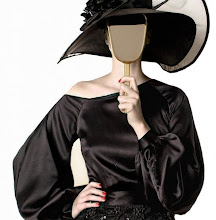
Thorsten Brinkmann Lady Glittersky, 2009 © Thorsten Brinkmann, VBK, Wien 2013

Peter William Holden SoleNoid β Photo: Medial Mirage / Matthias Möller © Peter William Holden

Ute Klein Resonanzgeflecht #2, 2009 © Ute Klein


The exhibition FACELESS at freiraum quartier21 INTERNATIONAL explores the phenomenon of inescapable recognizability in the media and the resulting strategies of media users to become virtually faceless. FACELESS takes a radical look at this fairly recent phenomenon of everyday media culture and shows how it manifests in visual art, fashion, photography, advertising, and dance. The show features works by artists like Marina Abramovic, Thorsten Brinkmann, Peter William Holden, and Maison Martin Margiela as well as projects created by unknown Internet dwellers.

The highly diverse strategies and methods of making faces “disappear” on the Web can be read as ironic, angry, or justified criticism of our media-infused reality. Faces do not disappear, but are manipulated beyond recognition, sometimes disfigured. The artist Bogomir Doringer, in collaboration with Brigitte Felderer from the University of Applied Arts Vienna, curated the two-part exhibition FACELESS. Part 1 is on view from July 3rd to September 1st, 2013.

“Many of the faces that appear on the Web are familiar and well-known. We recognize them, associate biographies, scandals, stories with them, and get the impression of gaining an insight into a personality and even witnessing an entire life. But in the end, the physiognomies we encounter only reflect our own personal concept of happiness, recognition, attention, and success,” says Brigitte Felderer.

“FACELESS critically examines problems of our media culture and presents the various approaches taken by the artists selected. Due to the complexity of the subject, the exhibition will be shown in two parts, a first for freiraum quartier21 INTERNATIONAL,” adds Dr. Christian Strasser, director of the MuseumsQuartier Wien.

After the events of 9/11 and in response to the fear of terrorist attacks, the levels of transparency and control have been taken to areas where they would have been unthinkable before. This has led to a change in security concepts and the expansion of surveillance systems. Social networks, which often violate privacy but promise their users popularity in exchange, have become the norm. Many artists critically engage with this subject and use “hidden” faces as a possibility to live an unobserved life.

Artist Thorsten Brinkmann, for example, presents self-portraits that in color, pose, and composition are reminiscent of classic portrait painting. But used and discarded everyday objects replace his facial features. Masks and head coverings from fashion labels like Maison Martin Margiela, Viktor & Rolf, and Bernhard Willhelm suggest that models’ faces have been redundant for the presentation of collections.

Conversely, a public persona like Marina Abramovic attempts to relativize her high recognition value in photographic self-portraits. Frank Schallmaier, in turn, makes collages using photographs that he finds in social networks and online matchmaking sites for homosexuals: they portray people who show themselves, but hide their faces with the promise of retaining anonymity. Hester Scheurwater’s photographic works examine the media representation of women as objects of desire. In Ute Klein’s photographs the bodies of lovers melt into temporary, faceless sculptures. The self-portraits of Nienke Klunder parody the banal omnipresence of erotic images while Peter William Holden’s installation features body parts that dance.

The side program of the exhibition includes special events, artist talks, workshops for kids and teens, and podium discussions. On opening night, visitors will be able to participate in the performance “Anonymity” by Addie Wagenknecht and Stefan Hechenberger, a playful critique of surveillance society. Black glasses distributed to the visitors are reminiscent of censor bars and images from surveillance cameras make the observed into observers. Addie Wagenknecht and Stefan Hechenberger developed “Anonymity” in New York and adapted it for the opening of the exhibition FACELESS. They are artists-in-residence of the Artistic Bokeh initiative, part of the Artistic Technology Research project of the University of Applied Arts Vienna.


Artists (Selection):
Marina Abramovic (SRB/USA), Martin Backes (GER), Thorsten Brinkmann (GER), Asger Carlsen (DEN/USA), Paul DeFlorian (AUT/GER), D+M (Dora Budor & Maja Cule) (CRO/USA), Caron Geary (GBR), Harem Royal (SRB), David Haines (GBR/NED), Stefan Hechenberger (AUT), Sabi van Hemert (NED), Peter William Holden (GBR/GER), Ute Klein (GER), Nienke Klunder (GBR), Zachari Logan (CAN), Maison Martin Margiela (BEL), Ismaël Moumin (BEL), Ana Rajcevic (SRB/GBR), Mustafa Sabbagh (ITA), Daniel Sannwald (GER), Frank Schallmaier (NED), Hester Scheurwater (NED), Levi van Veluw (NED), Viktor & Rolf (NED), Anne de Vries (NED), Addie Wagenknecht (USA), Bernhard Willhelm (GER), WOODKID (FRA).
Some of the artists will prepare their works as artists-in-residence at the MuseumsQuartier.

FACELESS is organized in cooperation with the Federal Ministry for European and International Affairs, the Dutch Embassy in Austria, and the Young European Federalists (JEF/BEF).

3/30/2013

SAM SCOTT SCHIAVO : FLESH TO FLESH


photos by : Sam Scott Schiavo

samscottschiavo.com

‘And you, their best beloved one, are now to me, flesh of my flesh; blood of my blood; kin of my kin; my bountiful wine-press for awhile; and shall later on be my companion and my helper.’
-Bram Stoker, Dracula


3/23/2013

SAM SCOTT SCHIAVO : LA SOLITUDINE

photos by : Sam Scott Schiavo

samscottschiavo.com


GARLAND COO AND SIBIU

GARLAND COO
&
s i b i u
garlandcoo.com

From Carpathian heights to Black Forestian mountains
From the eastern sun to the gloomy firmament
Roots to roots
Heritage to heritage
Soul to soul
Blood to blood
A collaboration is born – now…

Profile
Inga Melzer, born in Sibiu, Romania, now Berlin based, studies fashion design.
She launched her label Sibiu lately.
With her designs she raises the tension between her Carpathian heritage and the metropolitain jungle she now lives in.

Jasmin Isabel Eckerle, founder and designer of her label Garland Coo studied fashion design in Stuttgart.
With her aesthetic beliefs she also raises the tension between her Black Forestian heritage, her native landscape and the metropolis.

The concept of the collaboration
Two wandering spirits, one from the eastern sun, one from the darken forest.
Caught in their roots, their heritage, emancipate theirselves and arise as a unique collaboration.
All items made with passion for details, it is the variations of light and shade, the blood red hand-dyed silk and batiste, the armour-like cotton chintz and linen.
The cut-outs, like the shadow on the forest floor on a sunny day, the silhouettes a dichotomy between slim-cut and cloaking.
A collection which is dedicated to all women of the past, who have fought for their passions,heir beliefs, for all strong women from now on…


Blog Widget by LinkWithin